About

About

About

About

BloodScan Biotech is a life science technology company pioneering the first true liquid biopsy platform based on circulating tumor cells (CTCs).
Our flagship system, Labyrinth One, isolates intact and viable CTCs from a simple blood draw, delivering insights equivalent to tissue biopsy — without the risks and limitations of invasive procedures. This enables cancer detection from stage 0 through advanced disease, and supports applications ranging from early diagnosis to treatment monitoring and precision oncology research.
Built on over a decade of scientific development, BloodScan’s technology is validated by more than 15 peer-reviewed publications and is being adopted by clinicians, research centers, and diagnostic laboratories worldwide.
At BloodScan, our mission is to make biopsy-quality cancer insights accessible without invasive procedures.
Our Mission
Our Mission
While tissue biopsy remains the gold standard for diagnosis and treatment planning, it is often inaccessible, unsafe, or impractical — especially in tumors that are deep-seated, in fragile patients, or in cases requiring repeat sampling. Our platform, Labyrinth One, delivers the first true liquid biopsy, providing intact, viable CTCs directly from blood. These CTCs are comparable to tissue biopsies, enabling oncologists and researchers to access tissue-equivalent insights non-invasively, even from stage 0 cancers.
2025
2025
FDA registration achieved for Labyrinth One.
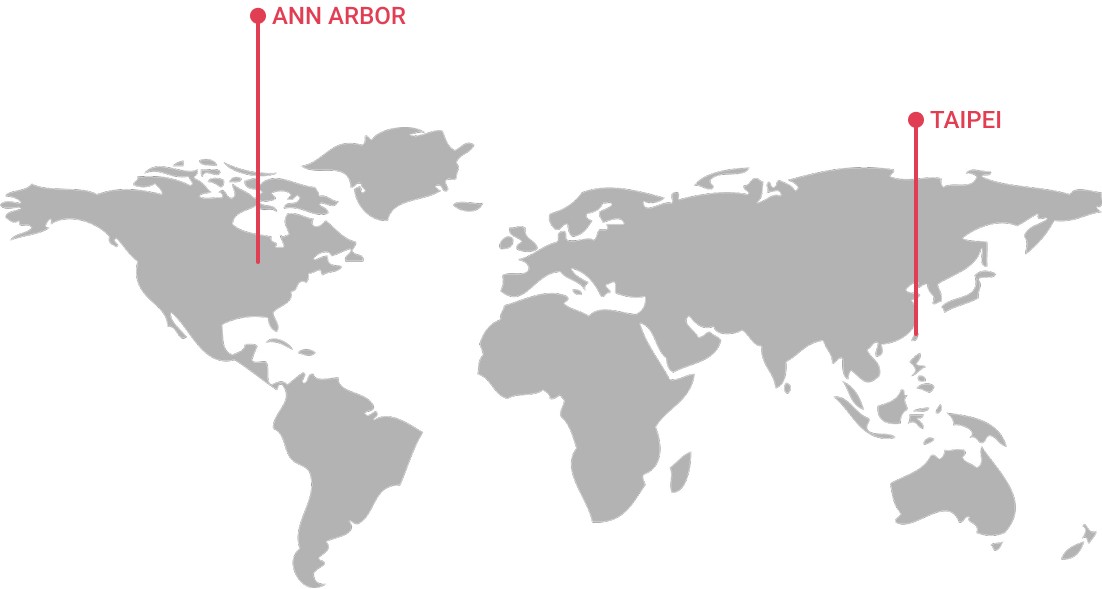
Commercial launch in the US and Taiwan with CLIA lab partners.
World’s first proof of CTC detection in ductal carcinoma in situ (DCIS, stage 0 breast cancer), marking a global milestone in early cancer diagnostics.
FDA registration achieved for Labyrinth One.
Commercial launch in the US and Taiwan with CLIA lab partners.
World’s first proof of CTC detection in ductal carcinoma in situ (DCIS, stage 0 breast cancer), marking a global milestone in early cancer diagnostics.
2024
2024
Beta prototype with industrial design completed. Early validation studies with cancer centers. Awards from Academia Sinica for Clinical Validation and International Market entry.
2023
2023
Company founded; entities established in US, Singapore, and Taiwan. Alpha prototype development initiated.
2019
2019
Breakthrough study in Nature Communications establishes Hydro-Seq, enabling contamination-free, high-throughput single-cell analysis of CTCs.
Validation of the new Labyrinth device for CTC detection published in Scientific Reports.
Breakthrough study in Nature Communications establishes Hydro-Seq, enabling contamination-free, high-throughput single-cell analysis of CTCs.
Validation of the new Labyrinth device for CTC detection published in Scientific Reports.
2018
2018
Patent on the core Labyrinth technology granted; comprehensive review published in Annual Review of Biomedical Engineering highlights Labyrinth’s potential for cancer diagnostics.
2017
2017
First landmark publication in Cell Systems demonstrates high-throughput Labyrinth microfluidics for circulating tumor cell (CTC) detection.
2011
2011
Development of the first Labyrinth microfluidic chip begins at the University of Michigan.
“We continue to learn, guided by one belief: this work can make a real difference for patients.”
— Dr. Eric Lin, Co-founder & CEO

Future Vision
Future Vision
Accessible to All
Making CTC analysis accessible to everyone — not limited by geography, infrastructure, or expertise.
A Global Standard
Establishing liquid biopsy as a global standard of care, wherever tissue biopsy is unsafe, impractical, or impossible.
Cancer as a Manageable Disease
Enabling cancer to be detected early, monitored continuously, and managed precisely — turning cancer into a controllable chronic condition through blood-based insights.