Capturing cancer cells from blood could help doctors choose the right breast cancer treatment
Capturing cancer cells from blood could help doctors choose the right breast cancer treatment
原文連結:
原文連結:
原文連結:
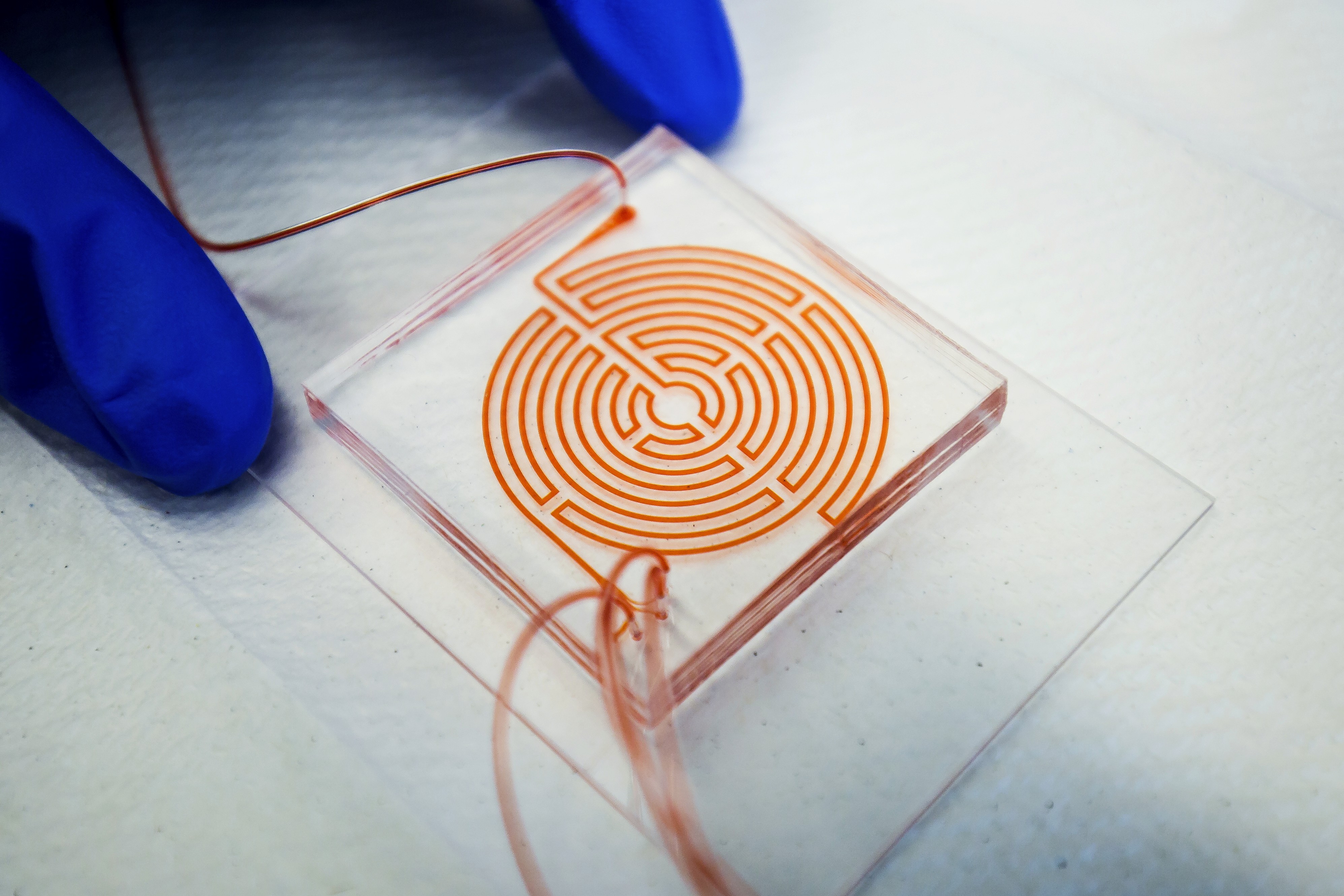
This story was originally published by Michigan Engineering News.
Doctors may be able to spare patients unnecessarily aggressive breast cancer treatments by collecting and testing cancer cells in patients' blood, research from the University of Michigan and the University of Kansas suggests.
Of the 2.3 million women with breast cancer today, around a quarter are diagnosed at an early stage where cancer hasn’t spread, called ductal carcinoma in situ, or DCIS.
While these patients tend to have a good prognosis, the cancer can become invasive in 10% to 53% of untreated cases.
With such high stakes, and no accurate way to predict what will happen for any single patient, clinicians recommended that all women with ductal carcinoma in situ receive treatment, which can include lumpectomy or mastectomy.
Radiation therapy is recommended for patients that get a lumpectomy, and patients that test positive for hormone receptor-positive DCIS can also receive anti-hormonal therapy.
“Since early detection can save lives, physicians are now recommending mammograms at younger ages, so more young women have to make some life-altering choices,” said Sunitha Nagrath, the Dwight F. Benton Professor of Chemical Engineering and a co-corresponding author of the study published in Science Advances.
“Currently, patients are often presented with treatment options without adequate information regarding which choice may be most effective based on their individual risk factors.”
Some patients may receive aggressive treatments although their cancer might not have spread. For others, treatment might not be aggressive enough.
Cancer reoccurs within 10 years for around 10% of cases treated with surgery alone, research suggests.
To find methods for discovering the right approach, the National Institutes of Health partly funded the research.
This story was originally published by Michigan Engineering News.
Doctors may be able to spare patients unnecessarily aggressive breast cancer treatments by collecting and testing cancer cells in patients' blood, research from the University of Michigan and the University of Kansas suggests.
Of the 2.3 million women with breast cancer today, around a quarter are diagnosed at an early stage where cancer hasn’t spread, called ductal carcinoma in situ, or DCIS.
While these patients tend to have a good prognosis, the cancer can become invasive in 10% to 53% of untreated cases.
With such high stakes, and no accurate way to predict what will happen for any single patient, clinicians recommended that all women with ductal carcinoma in situ receive treatment, which can include lumpectomy or mastectomy.
Radiation therapy is recommended for patients that get a lumpectomy, and patients that test positive for hormone receptor-positive DCIS can also receive anti-hormonal therapy.
“Since early detection can save lives, physicians are now recommending mammograms at younger ages, so more young women have to make some life-altering choices,” said Sunitha Nagrath, the Dwight F. Benton Professor of Chemical Engineering and a co-corresponding author of the study published in Science Advances.
“Currently, patients are often presented with treatment options without adequate information regarding which choice may be most effective based on their individual risk factors.”
Some patients may receive aggressive treatments although their cancer might not have spread. For others, treatment might not be aggressive enough.
Cancer reoccurs within 10 years for around 10% of cases treated with surgery alone, research suggests.
To find methods for discovering the right approach, the National Institutes of Health partly funded the research.