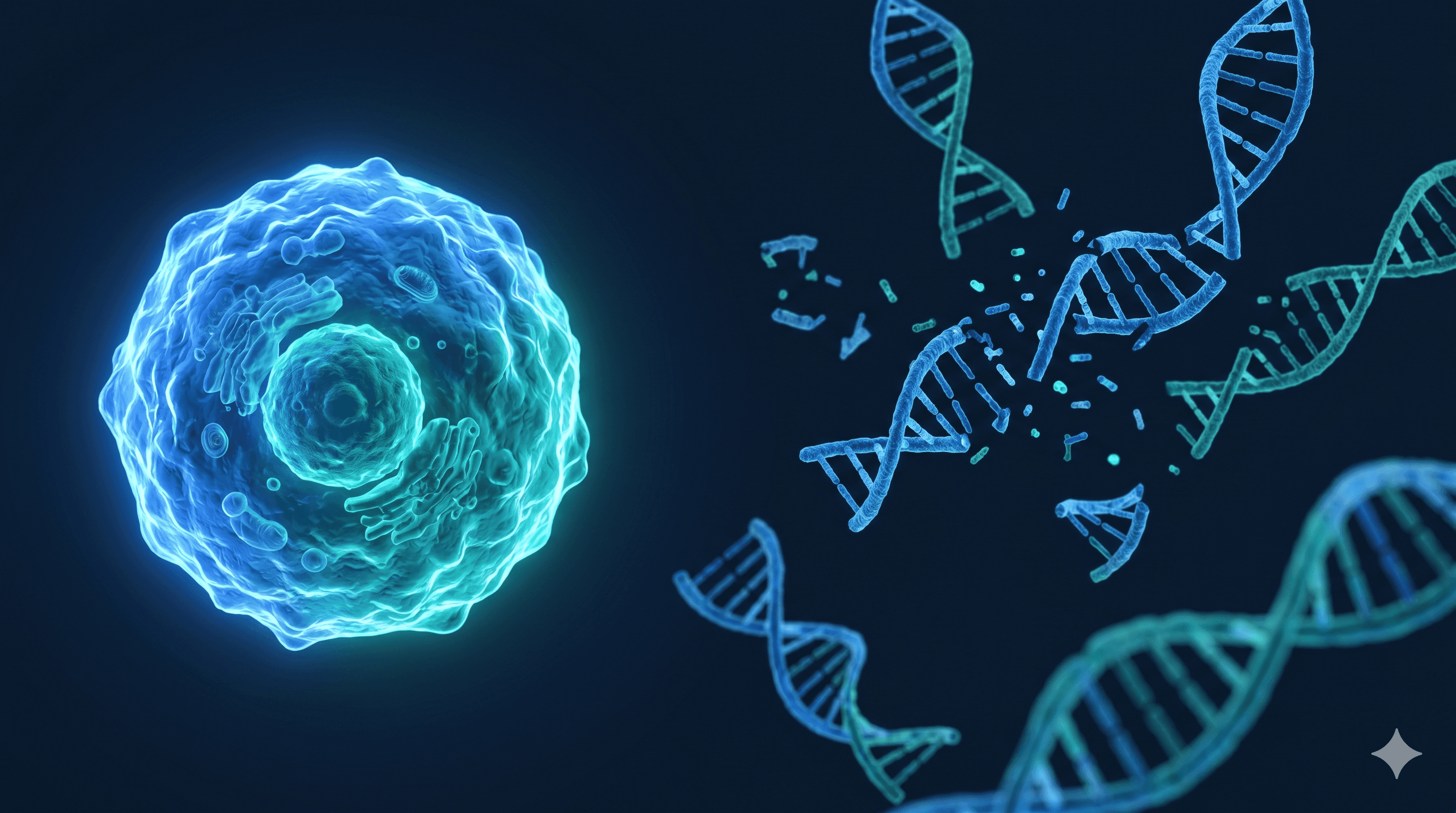
CTCs and ctDNA are the two most common liquid biopsy analytes, but they are fundamentally different. ctDNA is fragmented tumor DNA released into the blood; CTCs are whole, intact tumor cells. ctDNA can tell you which mutations are present; intact CTCs let you study the actual cells, their morphology, protein expression, single-cell genomics, and even drug response.
Quick comparison
ctDNA measures fragmented tumor DNA; its strengths are sensitive mutation detection, easy scaling, and tracking molecular trends; its limitation is that there are no cells, so no morphology, phenotype, or functional testing. CTCs are whole intact cells; their strengths are cell-level biology, single-cell resolution, protein and functional assays, and biopsy-equivalent genomics; the limitation is that they are rare cells requiring sensitive enrichment.
What ctDNA does well
ctDNA is excellent for broad, sensitive mutation screening and for tracking molecular signals over time. When the question is purely which mutations are present, ctDNA is a strong, scalable tool.
What only intact CTCs can provide
Whole-cell morphology and phenotype; single-cell genomic resolution to study tumor heterogeneity; protein-level characterization; and functional and viability assays, including culture and drug-response testing. In short: where ctDNA tells you what mutations exist, CTCs let you study the cells that carry them.
Concordance with tissue
A common concern with liquid biopsy is whether blood-based results match the tumor itself. BloodScan reports 97% genomic concordance between intact CTCs and matched tissue, meaning a simple blood draw can deliver tissue-equivalent genomic insight.
When to choose which
Choose ctDNA when you need broad, sensitive mutation screening at scale. Choose a CTC-based approach when you need cellular biology, single-cell heterogeneity, functional or drug-response assays, or a biopsy-equivalent when tissue sampling is impractical.
Frequently asked questions
Is CTC better than ctDNA?
Neither is universally better; they answer different questions. ctDNA excels at mutation screening; CTCs preserve whole-cell biology and enable functional assays.
Can you get genomic data from CTCs?
Yes. BloodScan reports 97% genomic concordance between intact CTCs and matched tissue.
Why do intact cells matter?
Intact, viable cells can support morphology, single-cell analysis, and functional drug-response testing, none of which are possible with DNA fragments alone.
Does BloodScan capture both?
BloodScan focuses on isolating intact, viable CTCs using the label-free Labyrinth One system, preserving the full biology of the cell.