Using Circulating Tumor Cells to Track Patient Dynamics in Oncology Clinical Trials
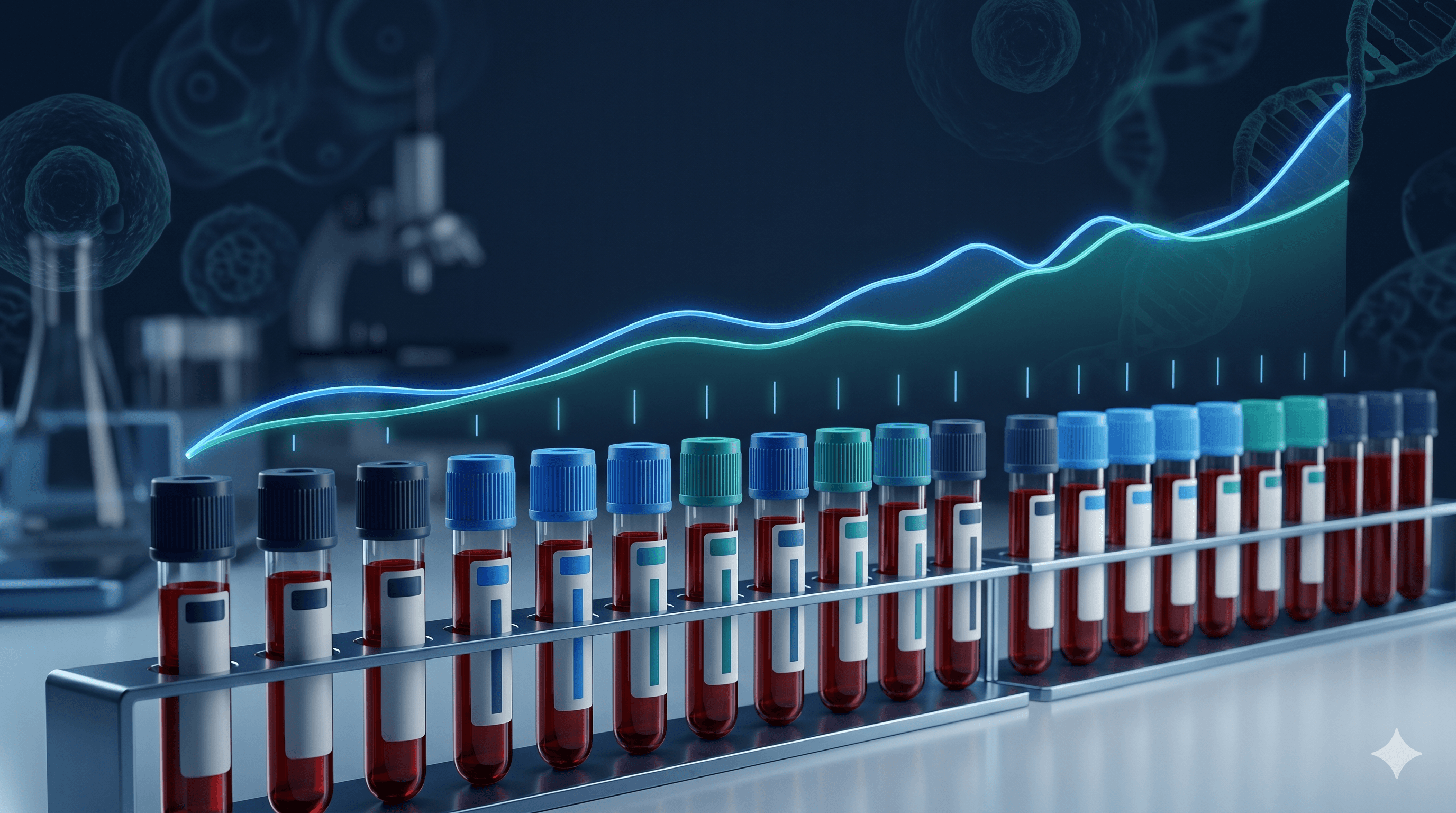
In oncology clinical trials, repeatedly biopsying tissue is often impractical or unsafe. Circulating tumor cells (CTCs) provide a non-invasive alternative: from serial blood draws, sponsors can track how a patient’s tumor changes over time, including cell counts, genomic evolution, and functional response, without repeat tissue procedures.
Why CTCs fit clinical trial workflows
Trials need data points across many timepoints and many patients. Because CTCs are collected from a standard blood draw, they support longitudinal, minimally invasive sampling that can be repeated as often as the protocol requires, at baseline, on-treatment, and at progression.
Three ways CTCs support trials
First, pharmacodynamic monitoring: changes in CTC counts over time can be used to follow tumor burden and treatment response, giving a dynamic readout between or instead of imaging timepoints. Second, patient stratification and selection: BloodScan’s label-free, antigen-agnostic capture works across heterogeneous tumor types, supporting broad applicability for enrollment and stratification rather than being limited to a single surface marker. Third, functional and translational endpoints: because Labyrinth One isolates intact, viable cells, those cells can feed downstream genomics and drug-response assays, adding mechanistic insight that fragmented-DNA approaches cannot provide.
The advantage of label-free, automated enrichment
Consistency across sites and timepoints is critical in multi-center trials. The Labyrinth One system is automated, high-throughput, and label-free, which supports reproducible enrichment at scale. BloodScan reports near-100% CTC capture across stage IV solid tumors, a reliable signal in late-stage cohorts where monitoring matters most.
A practical workflow
Standard blood draw into EDTA tubes at each protocol timepoint; automated CTC isolation with Labyrinth One; enumeration plus genomic and functional assays on intact cells; and longitudinal data on how each patient’s disease is evolving.
Frequently asked questions
Why use CTCs instead of tissue biopsy in a trial?
Repeat tissue biopsies are often impractical or unsafe. CTCs allow serial, minimally invasive sampling from a routine blood draw.
CTCs or ctDNA for monitoring response?
ctDNA tracks molecular signals; CTCs add whole-cell and functional information. Many programs use them as complementary readouts.
Which tumor types are supported?
Because capture is label-free and antigen-agnostic, the approach applies broadly across solid tumors rather than a single marker-defined subset.
What are the sample logistics?
Standard EDTA or compatible vacutainer tubes, collected at each protocol timepoint.