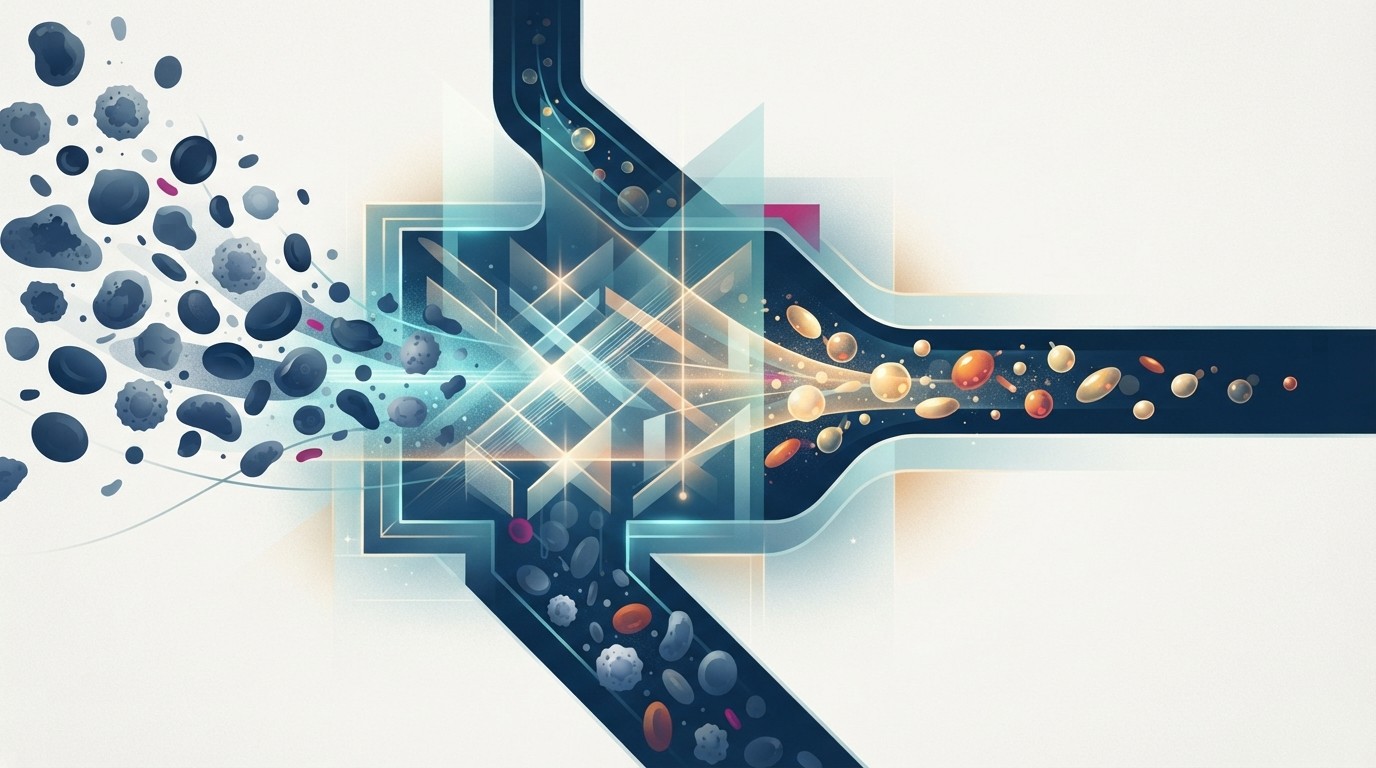
Circulating Tumor Cells (CTCs) are rare, elusive, and incredibly valuable for clinical diagnostics and cancer research. While traditional enrichment methods have relied heavily on positive selection—using antibodies to target surface markers like EpCAM—these approaches often miss sub-populations of cells undergoing Epithelial-to-Mesenchymal Transition (EMT).
Label-free enrichment methods are changing the landscape of liquid biopsy by focusing on the physical properties of cells rather than their biochemical signature. Here is why this shift is critical for the future of oncology.
The Limitations of Affinity-Based Selection
Historically, positive selection methods have been the gold standard. However, they suffer from two major drawbacks:
Marker Dependence: If a tumor cell downregulates its target protein (e.g., EpCAM), the enrichment platform will fail to capture it.
Cell Alteration: Binding antibodies to the cell surface can trigger signaling pathways or introduce bias, potentially affecting downstream single-cell sequencing or functional analysis.
Leading Label-Free Techniques
Label-free methods exploit differences in size, density, deformability, and electrical charge. By using these intrinsic characteristics, researchers can isolate a broader spectrum of CTCs.
1. Microfluidic Size-Based Separation
By designing intricate micro-channels, researchers can trap larger tumor cells while allowing smaller blood cells to pass through. Advanced designs like "spiral microfluidics" use inertial focusing to separate cells by size with high throughput and minimal cell damage.
2. Dielectrophoresis (DEP)
This method uses non-uniform electric fields to manipulate cells. Because cancer cells often have different membrane capacitance and cytoplasmic conductivity compared to white blood cells, DEP can sort them with high precision without ever touching the cell surface.
3. Micro-scale Filtration
Similar to size-based microfluidics, membrane filters leverage the rigidity of cancer cells versus the high deformability of erythrocytes and leukocytes. Recent advances in pore geometry have minimized clogging, a historical challenge with membrane-based filtration.
Why Label-Free is the Future
Label-free enrichment provides a "snapshot" of the CTC population that is far more representative of the primary tumor's heterogeneity. By capturing EMT-phenotype cells, researchers can gain deeper insights into metastatic potential and drug resistance mechanisms that standard markers often obscure.
Furthermore, because the cells remain in their native state, they are ideal candidates for downstream molecular analysis, including RNA-seq, Whole Genome Sequencing (WGS), and functional drug sensitivity assays.
Frequently Asked Questions
What is the main advantage of label-free CTC enrichment?
The primary advantage is the ability to capture heterogeneous cell populations, including those that have undergone Epithelial-to-Mesenchymal Transition (EMT) and do not express standard surface markers like EpCAM.
Are label-free methods less accurate than antibody-based methods?
Not necessarily. While antibody-based methods provide high specificity, label-free methods provide higher sensitivity to the total CTC burden by avoiding the bias associated with target marker expression.
Can I use label-free enriched cells for sequencing?
Yes. Label-free methods preserve the natural state of the cells, making them excellent candidates for sensitive downstream applications like single-cell RNA sequencing.