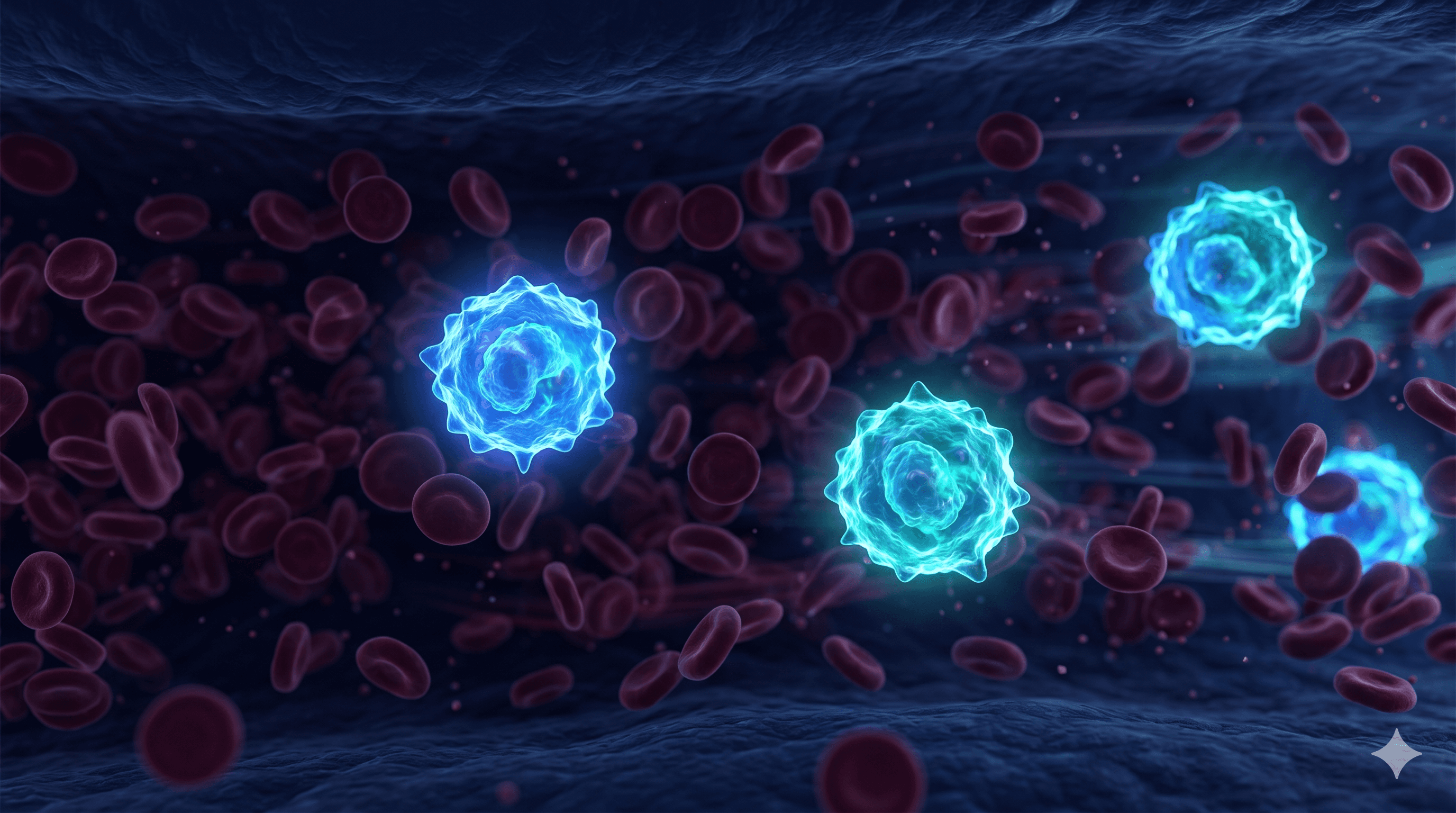
Circulating tumor cells (CTCs) are whole, intact cancer cells that break away from a primary or metastatic tumor and travel through the bloodstream. Because they are complete cells — not just fragments of DNA — CTCs carry the full biology of the tumor: its morphology, proteins, RNA, and genome. Capturing them from a simple blood draw makes it possible to study a patient’s cancer without a tissue biopsy.
Why CTCs matter
CTCs are central to how cancer spreads. They are the cells that leave a tumor, survive in circulation, and can seed new metastatic sites. Detecting and characterizing them provides a real-time, minimally invasive window into active disease, including how a tumor is evolving and responding to treatment.
CTCs vs other liquid biopsy analytes
A liquid biopsy can measure several things in blood. The three most discussed are CTCs (whole, living tumor cells), ctDNA (fragmented tumor DNA), and exosomes (small vesicles). The key difference is that CTCs are intact cells, enabling analyses the others cannot support: morphology, single-cell genomics, protein phenotyping, and functional drug-response assays.
What can you learn from a CTC?
Enumeration (the number of CTCs correlates with disease burden and can be tracked over time); genomics (mutations and tumor genotype, with high concordance to matched tissue); phenotype (protein expression and cell characteristics); and function (intact, viable cells can support culture and drug-response testing).
How are CTCs isolated?
The main challenge is rarity: CTCs may number only a handful among billions of blood cells. Methods fall into antibody/antigen-based capture (e.g., targeting EpCAM) and label-free capture (based on size and biophysical properties). BloodScan’s Labyrinth One system uses label-free, antigen-agnostic microfluidic enrichment to isolate intact, viable CTCs across tumor types, from stage 0 to stage IV, directly from a standard EDTA blood draw.
Why intact and viable is the key detail
Many approaches either damage cells or recover only DNA. Intact, viable CTCs preserve real tumor biology, so the same blood draw can feed histology, genomics, and advanced functional assays. BloodScan reports 97% genomic concordance between its intact CTCs and matched tissue, and near-100% CTC capture across stage IV solid tumors.
Frequently asked questions
Are CTCs the same as ctDNA?
No. ctDNA is fragmented tumor DNA; CTCs are whole, intact tumor cells that preserve cellular biology ctDNA cannot.
How rare are CTCs in blood?
Very rare, often only a few cells among billions of normal blood cells, which is why sensitive enrichment technology is required.
Can CTCs be detected in early-stage cancer?
BloodScan’s Labyrinth system has demonstrated CTC detection from the earliest stages, including pre-invasive conditions such as DCIS and early HCC.
What sample is needed?
A standard blood draw into EDTA or other compatible vacutainer tubes.
What are CTCs used for?
Research, disease monitoring, genomic profiling, and functional studies, a non-invasive, biopsy-equivalent alternative when tissue biopsy is difficult.